


Woopito Journal
How to choose a birthday gift for a child: age, interests and budget
A thoughtful present starts with the child, not the size of the box. Use age, interests and everyday play to choose.
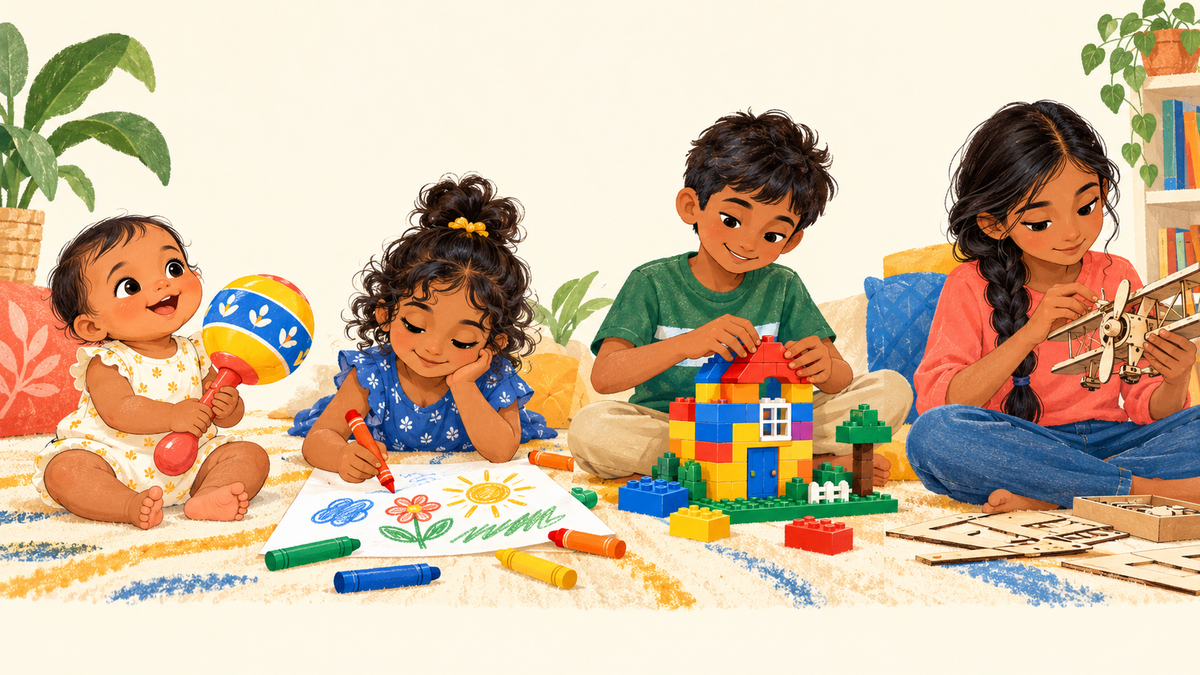
You know the birthday date. You may even know the favourite cake. But choosing a gift is harder when you have not seen what the child already owns. Start with three questions: how old are they, what do they choose to do for fun, and will someone be available to help them use the gift?
A useful rule: Treat the manufacturer’s age label as the starting requirement, then match the activity to the child’s interests. For babies and toddlers, ask the parent first. For school-age children, choose between making, imagining, collecting and playing together.
0–1 year: ask about the exact month
A newborn and an eleven-month-old have different needs. Do not read a broad “baby” category as approval for every infant. For example, Fisher-Price Rattle ’n Rock Maracas have a 3 months+ label, so they are not a newborn recommendation. The set contains two rattles with soft fabric tops and graspable handles.
Check with the parent about what they already have and the child’s current stage. Browse the small 0–1 year selection, then read the individual product guidance. Do not put play items in a sleeping baby’s cot.
1–2 years: keep the choice specific
Ask whether the child enjoys putting things in and out, looking at pictures or moving toys around. Choose something designed for their exact age rather than a miniature version of an older child’s toy. The 1–2 year collection is a starting point; each item still needs a label check. A 3+ vehicle or small brick set is not a toddler gift.
3–4 years: a recognisable invitation to play
A child who talks about every vehicle on the road may enjoy the Centy pull-back auto rickshaw, marked 3+. Add a simple paper road at home and let them decide where the driver is going.
For a child aged four or above who likes colouring, Crayola Scribble Scrubbie Dino Pets offers two dinosaurs to colour and wash using the included materials. Its minimum age is 4+, so it is not a pick for every child in the 3–4 year category.
5–7 years: choose a starting point, then leave room for ideas
For an open-ended builder aged five or above, LEGO Classic 11028 Creative Pastel Fun contains 333 pieces and building ideas. A child can follow a model and then invent another. Check that the family has somewhere to keep small pieces away from younger siblings.
For a six-year-old who likes making a finished object, Smartivity Roll n Match combines assembly and a puzzle, with a stated 6–12 age range. For family play, Hasbro Classic Jenga is marked 6+. Compare these with the 5–7 year selection; a 7+ game is only appropriate once the child meets that age.
8–12 years: follow the interest
A child who enjoys family games may prefer Monopoly Deal, marked 8+, to another display toy. A vehicle enthusiast might enjoy building the LEGO Technic John Deere tractor, a 390-piece set marked 8+.
Ask one more question before buying: do they want a quick game they can replay, or a project they can keep working on? The answer is often more useful than asking which toy is “best”. See gifts for ages 8–12.
13+ years: give the hobby some respect
Older children and adult collectors can be particular about a model, colour or set number. Ask for a small wish list, or check what is missing from a collection. Explore cars and collectibles and older-child and collector ideas. Some sets carry an 18+ label; a broad 13+ browse category does not make every item suitable for a thirteen-year-old.
How much should you spend?
Set a comfortable limit before comparing options. Gifts under ₹500 work for small surprises; gifts under ₹1,000 and ₹1,000–₹2,500 gifts provide other choices. A carefully chosen smaller gift can be used more often than a large set that does not match the child.
Product age details were checked against Woopito listings on 31 October 2026. Read the supplied packaging before use. For general guidance, see the American Academy of Pediatrics’ toy-buying advice. Shopping for several children? Our return-gift guide includes budget examples.
Editorial illustration created for this guide; pictured scenes are not customer photographs or exact product contents. Follow the linked product pages and packaging for specifications.